Introduction
Imagine waking up to a freezing shower or, worse, an inch of water in your basement. It is a nightmare scenario most homeowners face because water heaters are often “out of sight, out of mind” until they fail, usually at the most inconvenient time. However, being proactive can save you from a major headache.
Spotting early warning signs your water heater needs repair can save you lots of money on pricey repairs and sudden leak damage. Whether you seek local Water Heater Repair Services in San Jose or want a new Water Heater Replacement in San Jose, checking for these 10 bad signs keeps your home cozy and helps the heater last longer.
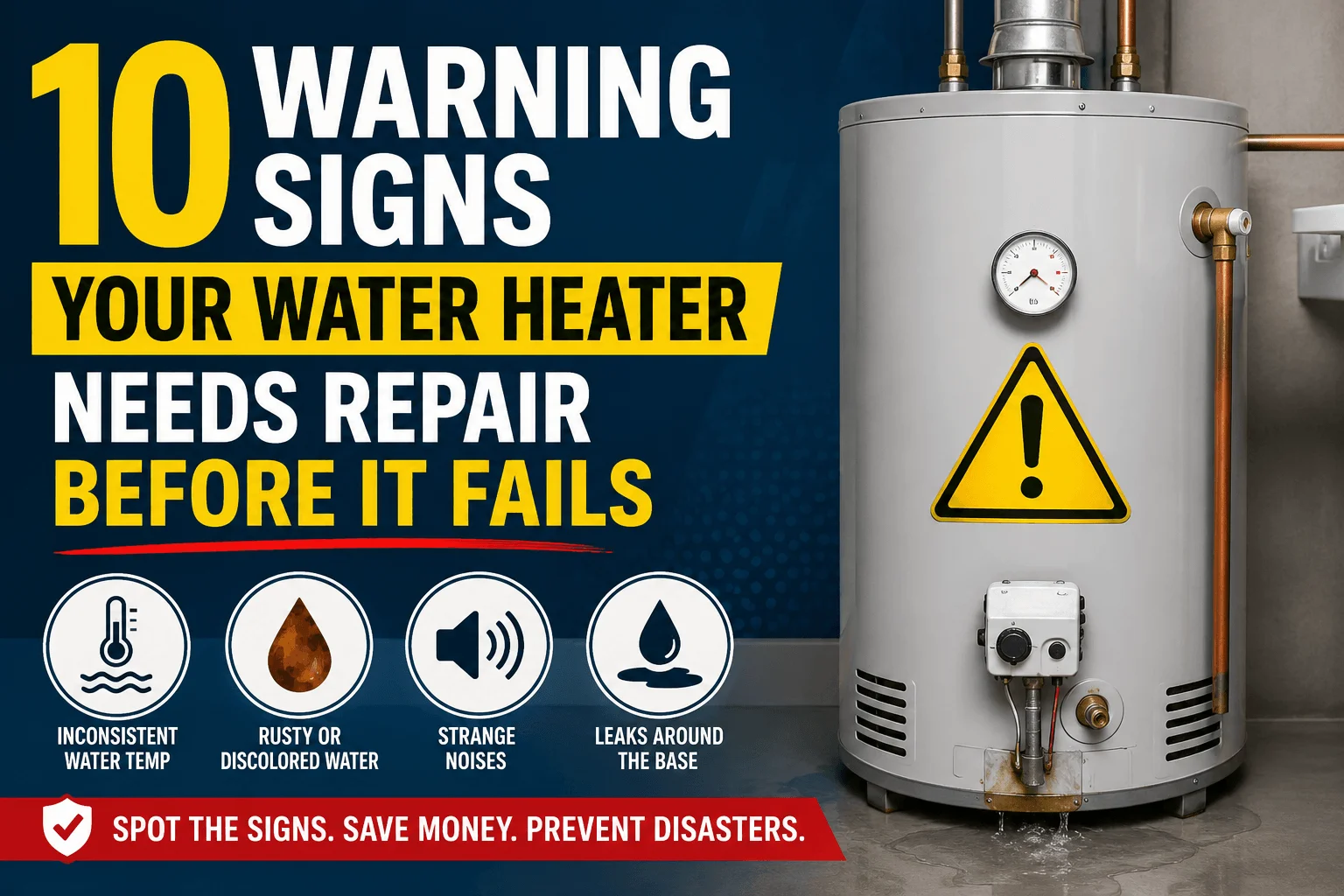
10 Warning Signs that Your Water Heater Needs Immediate Repair
1. Fluctuating Water Temperatures
The Symptom:
The main symptom is when you observe that your shower is switching from burning hot to ice cold for no reason. The heater parts are weak, or the control dial is broken, as it moves back and forth. For a steady flow of warm water, it makes it hard to have.
The Cause:
The heat from moving into the water is blocked due to the tiny rocks that build up on the heater parts. It would cause a broken heat dial to stop functioning. This would lead to the water getting too hot or too cold at different times during the day.
2. Discolored or “Rusty” Water
The Symptom:
The water looks brown, red, or dark instead of clear when you turn on the hot sink. This makes your water dirty and unsafe for your family to use because this strange color means rust is growing inside your tank or pipes.
The Cause:
When the inner skin gets old and breaks inside the tank, the metal starts to eat away. Although the special rod inside is meant to stop rust, once it wears out, it causes danger. It is because the metal tank has no help and starts to rot. This will lead to damage to the whole heater
3. Strange Noises
The Symptom:
Your water heater making noise like loud banging, popping, or thumping sounds, which is a big sign of a problem. The main reason for these noises is that when hard dirt at the bottom of the tank traps steam. It makes a loud “boiling” sound while the water gets hot.
The Cause:
A thick wall of first and sand is made at the bottom of the tank. This makes the Bubbles of steam get stuck under that dirt. Moreover, as the fire heats the water, it makes a loud noise. This becomes a cause to put a lot of bad pressure on the machine.
4. Reduced Hot Water Capacity
The Symptom:
Do you ever notice that your hot water runs out much faster? It is like a shower getting cold after just five minutes. It is because heat is lost due to the dirt filling up the tank or because a part inside the machine is broken.
The Cause:
In the tank, thick dirt takes up too much space. This makes much less room for hot water. There can be some reasons for it, including the broken plastic tube. It is because it would let the cold water mix with the hot water at the top of the tank.
5. Persistent Leaks Around the Base
The Symptom:
You find small puddles, wet spots, or damp areas around the bottom of your heater. Even tiny leaks are big water heater repair signs of trouble that show you have loose parts or a dangerous crack in the main tank.
The Cause:
Cracks in the tank often happen because the metal grows and shrinks from years of heat. While some leaks come from loose parts or broken safety valves, a leak in the main tank wall usually means the whole heater is dead.
6. Low Water Pressure
The Symptom:
You will notice a weak flow of water. When you use the hot tap. Even though the cold water is flowing fast. The main cause of it is that inside your heater, thick dirt has clogged the pipes. This would lead to the path getting too small for the water to get through.
The Cause:
The heater’s entry and exit pipes are filled with thick dirt buildup, mostly from hard minerals. This makes the machine work too hard because the blockage works like a clogged straw. In this condition, it sends much less water to your sinks and showers.
7. Foul Smelling Water
The Symptom:
Whenever you use hot water, a strong, foul smell like “rotten eggs” fills the room. It happens because of the tiny germs. These grow inside the tank. These often react with a rotting metal rod that is supposed to protect the system.
The Cause: When tiny bugs that like warm water live there, then germs grow inside the tank. When a protective metal rod breaks down, this happens faster. This makes a gas that the bugs turn into a very smelly sulfur gas.
8. Age of the Unit
The Symptom:
Your water heater has been in use for 10 to 15 years or more. Old age means that it might break soon. Although it looks fine. It guides you on when to replace a water heater for safety.
The Cause:
After many years of use, old water heaters get worn out. They use too much power after the timeline of ten years. The metal parts of them start to break. The causes include making the machine likely to leak and making your bills very expensive.
9. Frequent Pilot Light Failures
The Symptom:
Despite your trying many times, the tiny flame on your gas heater keeps going out or will not stay lit. It clearly means that the burner cannot start. It makes you suffer in cold water. It also shows that a safety part is broken or blocked.
The Cause:
The most common cause of it is a broken sensor. It is because it neither feels the flame nor does it turn off the gas to keep you protected. Moreover, a dirty burner or blocked air can stop the tiny flame from getting enough air to stay lit.
10. Cloudy or Sandy Water
The Symptom:
If you notice that the hot water is looking cloudy or has some sandy bits at the bottom of the sink. This sand is actually broken dirt moving through your pipes, which can soon block your faucets and showerheads.
The Cause:
Too much dirt builds up until it can no longer stay at the bottom of the tank. These tiny bits of stone then get pulled into the hot water, travel through your pipes, and come out of your taps.
The Cost of Delay: Repair vs. Replacement
When to Repair
Fixing your heater is best for small problems like a broken heat switch or a worn-out metal rod. Most of these repairs can fix common issues without costing as much as buying a brand-new machine.
When to Replace
You need a new heater if the main tank cracks or if the machine is very old. If your heater is more than 12 years old, it is usually better to buy a new, better one instead of spending money to fix an old, broken machine.
Proactive Maintenance Tips
Flushing the Tank: Emptying your heater once a year is the best way to clean out dirt and rocks. By using a garden hose on the drain tap, you can wash away the bits that cause noise and power loss. This helps your heater last much longer.
Testing the T&P Valve
The T&P valve is an important part that stops the tank from having too much pressure. If you lift the small handle, a bit of water should come out. If it doesn’t, the valve is broken and you must get a new one right away to stay safe.
Checking the Anode Rod
This “helper” metal rod protects your steel tank by letting rust eat it instead of the tank. You should check it every two years. If the rod looks very thin and you see the wire inside, you must get a new one. A fresh rod is the best way to stop your tank from rusting.
Conclusion
Your water heater is a very important part of your home, but most people forget about it until the water gets cold or it starts to leak. By watching for indications that your water heater needs repair, you can solve small problems like dirt buildup before they become big, expensive messes.
Cleaning the tank once a year or having an expert check it helps the machine last a long time. Do not wait for it to break completely. Taking care of your heater today means you will have hot water and no worries for a long time.
Don’t Wait for a Cold Shower. Call Our Experts!
Stop leaks and cold water by having an expert check your heater today. Our team can fix your machine or give you a new one so it works perfectly.